
Strength training and joint health: Research roundup
By Ken Berger
Several recent reviews and trials show that resistance training can reduce joint pain, improve function, and may slow structural worsening in common joint conditions like knee and hip osteoarthritis.
A 2024 systematic review on resistance training for adults with knee and hip osteoarthritis found that strength programs consistently reduced pain and improved strength and physical function compared with usual care or minimal intervention. Many of the included programs lasted 4–12 weeks, used 2–3 sessions per week, and focused on lower‑body exercises like squats, leg presses, and step‑ups. Benefits were seen across different intensities, as long as training was progressive and regular.
https://pmc.ncbi.nlm.nih.gov/articles/PMC11676110/
https://pubmed.ncbi.nlm.nih.gov/39728043/
A 2024 analysis in people with knee osteoarthritis reported that resistance exercise, performed for several weeks to months, led to meaningful reductions in knee pain and improvements in walking ability and everyday function. The effect sizes were moderate, suggesting that strength work is a practical tool alongside other treatments.
https://acrjournals.onlinelibrary.wiley.com/doi/10.1002/acr.25313
https://pubmed.ncbi.nlm.nih.gov/38317328/
A well‑known randomized trial tested high‑intensity strength training versus a more moderate program in adults with knee osteoarthritis and followed joint structure over time using imaging. Both groups improved symptoms, and there was no evidence that heavier strength work caused faster joint‑space loss compared with the more conservative program, suggesting that appropriately supervised higher‑load training is not inherently damaging to the joint.
https://jamanetwork.com/journals/jama/fullarticle/2776330
Guideline statements now reflect this evidence base. The 2024 EULAR recommendations for non‑pharmacological management of hip and knee osteoarthritis list exercise therapy, including muscle‑strengthening work, as a core treatment, alongside education and weight management when appropriate. They advise tailoring exercise type and load to the individual, with gradual progression and ongoing support.
https://ard.bmj.com/content/83/6/730
https://pubmed.ncbi.nlm.nih.gov/38212040/
Finally, a 2025 trial of a scalable 12‑week exercise and education program for knee osteoarthritis showed that a mix of strength, aerobic, and neuromuscular exercises reduced pain and improved function, with benefits that persisted after the program ended. This supports the idea that even time‑limited, structured strength programs can have lasting positive effects.
For more of the latest longevity-focused content to help you live a longer, better life, subscribe to my free newsletter.

Want To Learn More First? Download A FREE Copy Of My Best-Selling Book ... Stronger After 60!
My new best-selling book, Stronger After 60, is your ultimate guide to optimal health, fitness and longevity through the power of science and healthy habits.
Stronger After 60 will change the way you think about aging. This book is designed for real people who want simple solutions to maintain their strength and youthful energy while enjoying the best things in life without restriction. It’s your roadmap to longevity, wellness and enjoying your 60s and beyond like someone half your age.
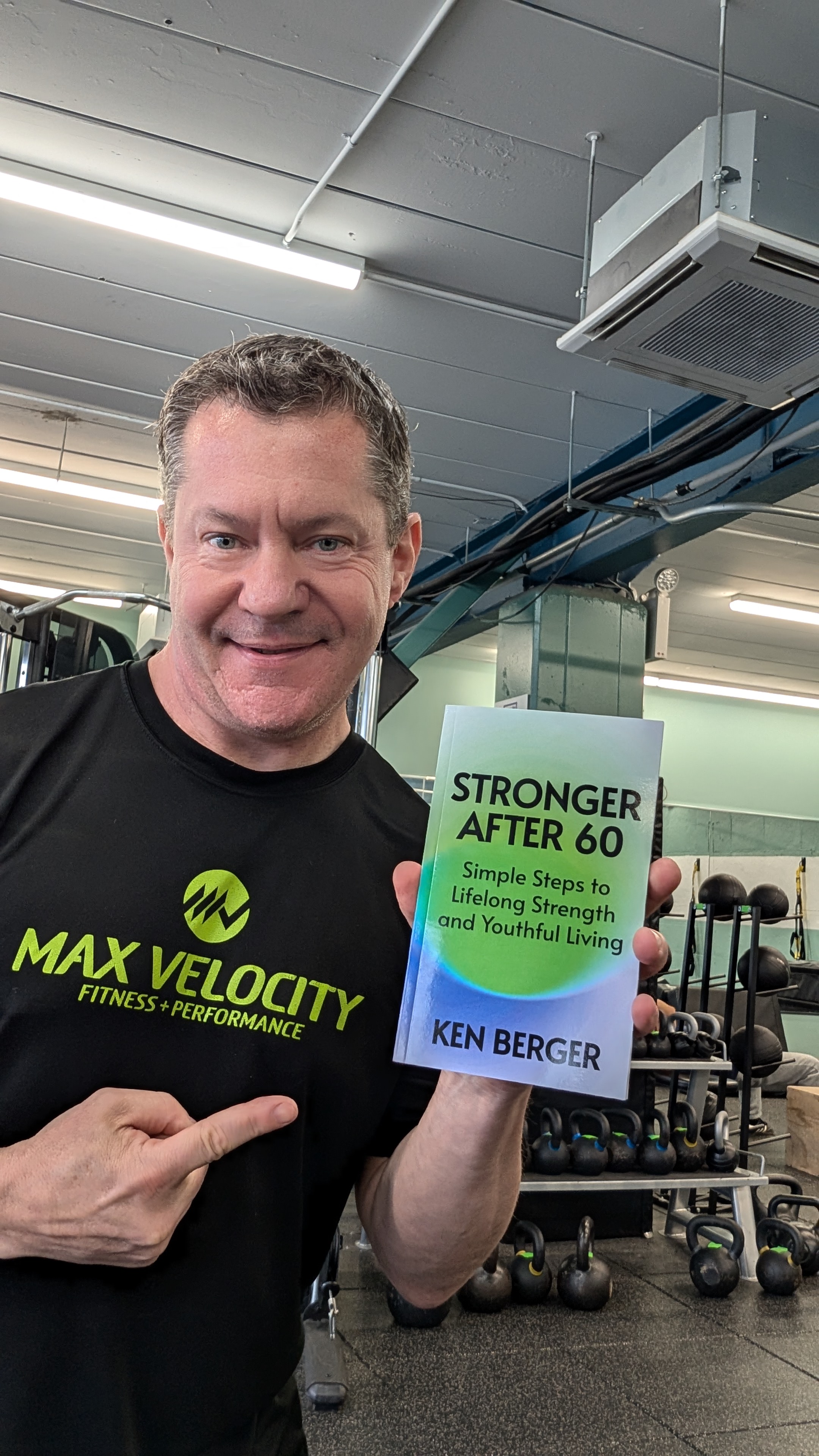
And TODAY, You Can Get Your Very Own Copy of Stronger After 60 ... for FREE!
Just click the button below, fill out your info, and a copy of Stronger After 60
will be on its way to your inbox in seconds!
Don't miss out on this life-changing opportunity. Get your FREE copy of Stronger After 60 NOW.

Max Velocity Fitness + Performance © 2023 . Privacy Policy

